The rook piercing, a jewel in the heart of the cartilage
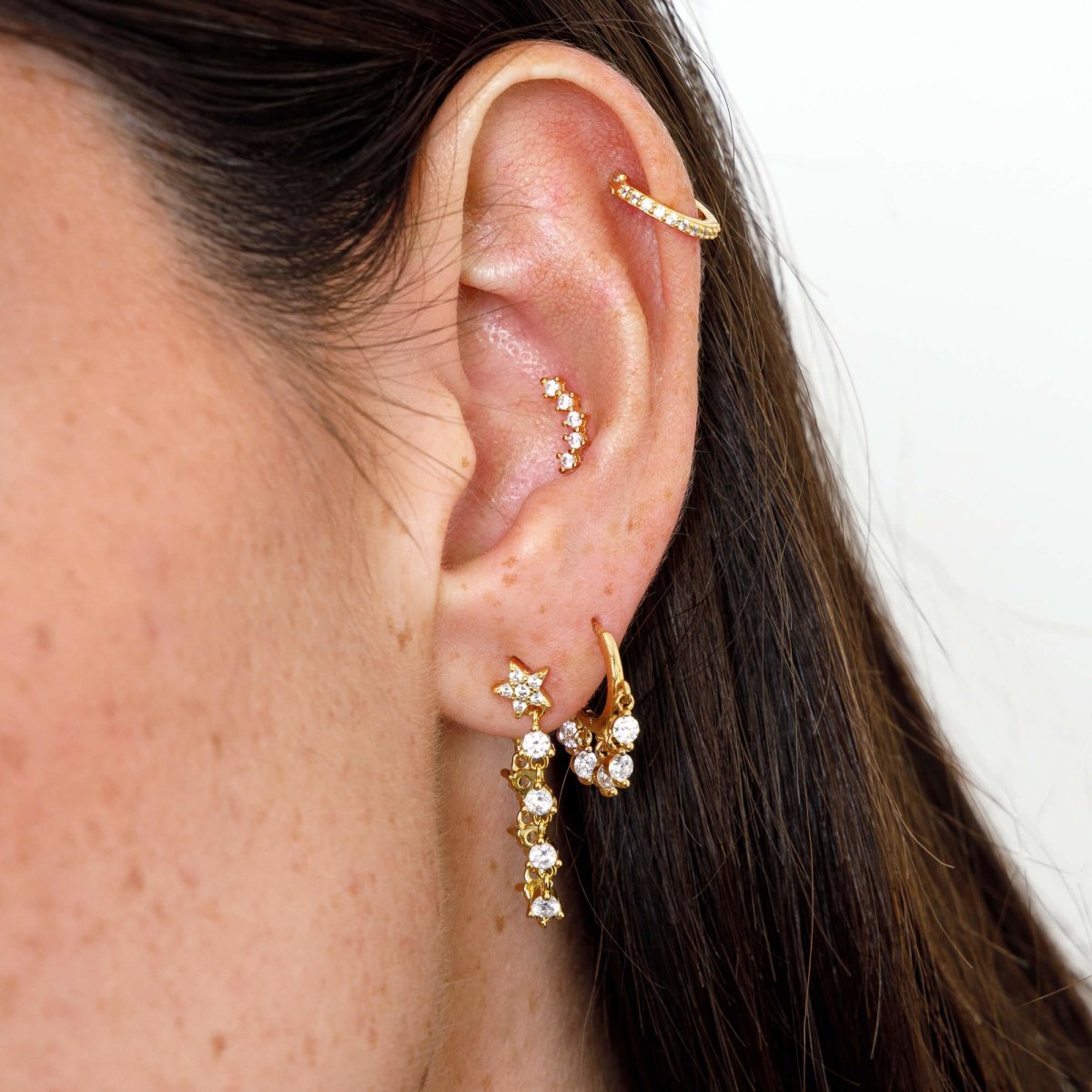
The rook piercing is a cartilage piercing located in the upper inner part of the ear, just above the daith and opposite the anti-helix. Discreet, original, and undeniably trendy, it stands out for its unique placement in the center of the ear, far from the most common choices. It accommodates a curved barbell or a thin ring, both options designed to follow the natural curve of the cartilage.
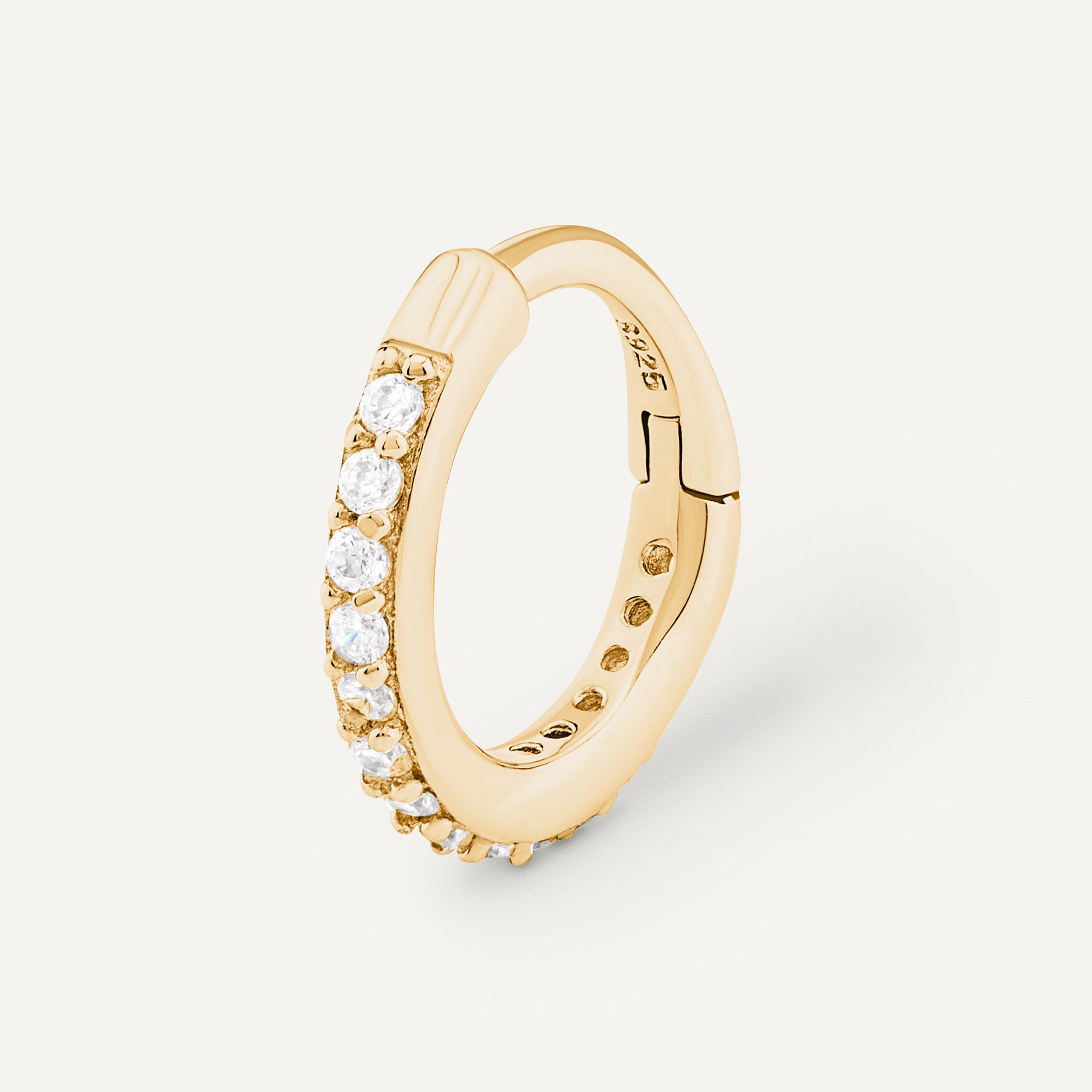
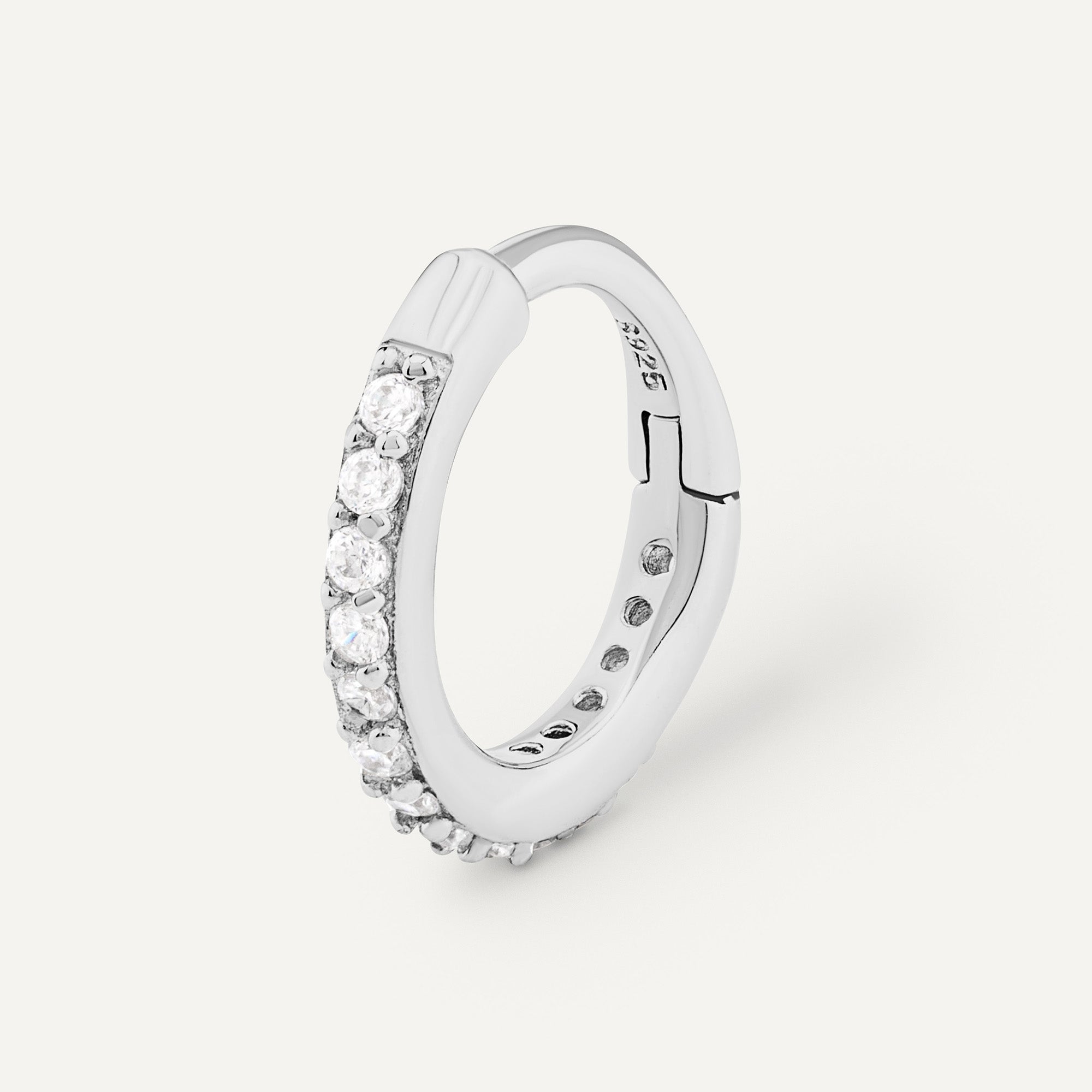
The Pohésia collection offers two materials: ASTM-F 136 grade titanium / PVD gold and 925 sterling silver plated with 18k gold, designed to combine quality, durability, style, and refined design.
Which jewelry should you choose for a rook piercing?
The rook piercing offers various style characteristics depending on the color and appearance of the chosen piece (stones, shape...)
Two options are suitable for this location:
- The curved barbell (micro-banana): this is the benchmark jewelry for the rook, especially during the healing process. Its curved shape perfectly follows the anatomy of the cartilage fold, which ensures a stable and comfortable fit. It is generally available in 6 to 8 mm, with a post thickness of 1.2 mm (16G), standard for this type of piercing.
- The ring and the horseshoe: once the piercing has healed, a clicker ring or a horseshoe can replace the barbell. The recommended diameter for a rook ring is 8 mm for a natural and comfortable result.
The shape must always follow the anatomy of the rook to minimize irritation and promote proper healing.
If you wish to explore other ear piercings, our pages helix piercing, tragus piercingand daith piercingawait you.
ASTM-F136 titanium, the ideal material for a rook
ASTM F136 titanium is today the reference material for cartilage piercings, and for good reason. Biocompatible and hypoallergenic, it is nickel-free and perfectly tolerated by the most sensitive skin, which significantly reduces the risk of allergy or rejection during healing.
Unlike steel, titanium is lighter, which limits the pressure exerted on the cartilage and improves comfort over time. Its durability makes it an investment that resists time and daily care.
At Pohésia, we have a vast selection of ASTM titanium piercings for a premium finish that does not tarnish. Find our entire range on our titanium jewelrypage.
What size should you choose for your rook jewelry?
The size of the jewelry directly influences the comfort and appearance of the rook piercing.
For a curved barbell, a length of 6 to 8 mm is generally suitable depending on the morphology, with a post thickness of 1.2 mm (16G). During the initial piercing, your piercer will often choose a slightly longer piece of jewelry to anticipate swelling. Once healing is advanced, it is advisable to switch to a smaller piece of jewelry for a tighter look and better comfort.
For a ring or horseshoe, a diameter of 8 mm is the standard. The weight of the jewelry also plays a role: titanium, lighter than steel, remains the best option for daily wear.
Always rely on your piercer's recommendations to determine the ideal size based on your anatomy.
Healing and care for the rook piercing
The healing of a rook piercing lasts between 6 and 12 months. Cartilage is less vascularized than fleshy parts like the lobe, which naturally extends the healing time and requires special attention during care.
To support healing under the best conditions: clean the piercing once or twice a day with clear water and saline solution; excessive cleaning can actually disrupt healing. Avoid harsh products like strong alcohol or hydrogen peroxide, never turn the jewelry, and avoid sleeping on the pierced ear to prevent irritation. Crusts should be soaked in water before being removed gently.
We recommend avoiding saunas and swimming pools for the entire duration of the healing process.
Signs of infection include persistent pain and intense redness: consult a piercer or healthcare professional if these symptoms appear.
ASTM F136 titanium remains the best option to limit these risks and support healing with complete peace of mind.
FAQ
Does a rook piercing hurt?
The pain of a rook piercing is more intense than the lobe because the needle passes through a thick part of the cartilage. On a scale of 1 to 10, it is generally rated at 6. The sensation is sharp but very brief; the piercing takes a few seconds, often done freehand with a sterile, curved needle. A slight pain may persist for several days after the procedure, which is normal. The experience varies from person to person: some handle it very well, others a little less so.
What is the meaning of a rook piercing?
The rook piercing has no established universal meaning. It is primarily chosen for its unique aesthetic and original placement in the heart of the ear, between the daith and the helix. It is a personal and aesthetic choice, reflecting a refined taste for discreet but remarkable jewelry.
What is the price of a rook piercing?
The price of a rook piercing includes two distinct elements: the studio service (on average €50 to €60, titanium jewelry sometimes included depending on the shop) and the jewelry itself.
At Pohésia, you can treat yourself to quality jewelry starting from €22 (excluding piercing service).
The quality of the materials used, ASTM-F 136 grade Titanium / PVD Gold or 925 Sterling Silver plated with 18k gold are our priority for optimal healing and a long-lasting result.
Can everyone get a rook piercing?
No, not systematically. The feasibility of a rook piercing depends on the ear's anatomy: the cartilage fold must be sufficiently prominent and deep to allow the needle to pass through under good conditions. If the cartilage is flat or not very defined, the rook cannot be performed. It is essential to have the feasibility validated by a professional piercer before booking an appointment.
Which ear piercing hurts the most?
Among ear piercings, cartilage piercings are generally more painful than those of the lobe. The rook is among the most sensitive locations, alongside the daith piercing and the anti-helix piercing, due to its deep position in the cartilage. However, pain remains subjective and varies from one person to another: everyone does not experience it the same way.
When can you change the jewelry in a rook piercing?
You must wait for complete healing (between 6 and 12 months) before changing the jewelry of a rook piercing. For the first change, entrust yourself to a professional piercer to avoid any trauma to a channel that is still fragile. Then, choose titanium or 925 sterling silver plated with 18k gold jewelry.