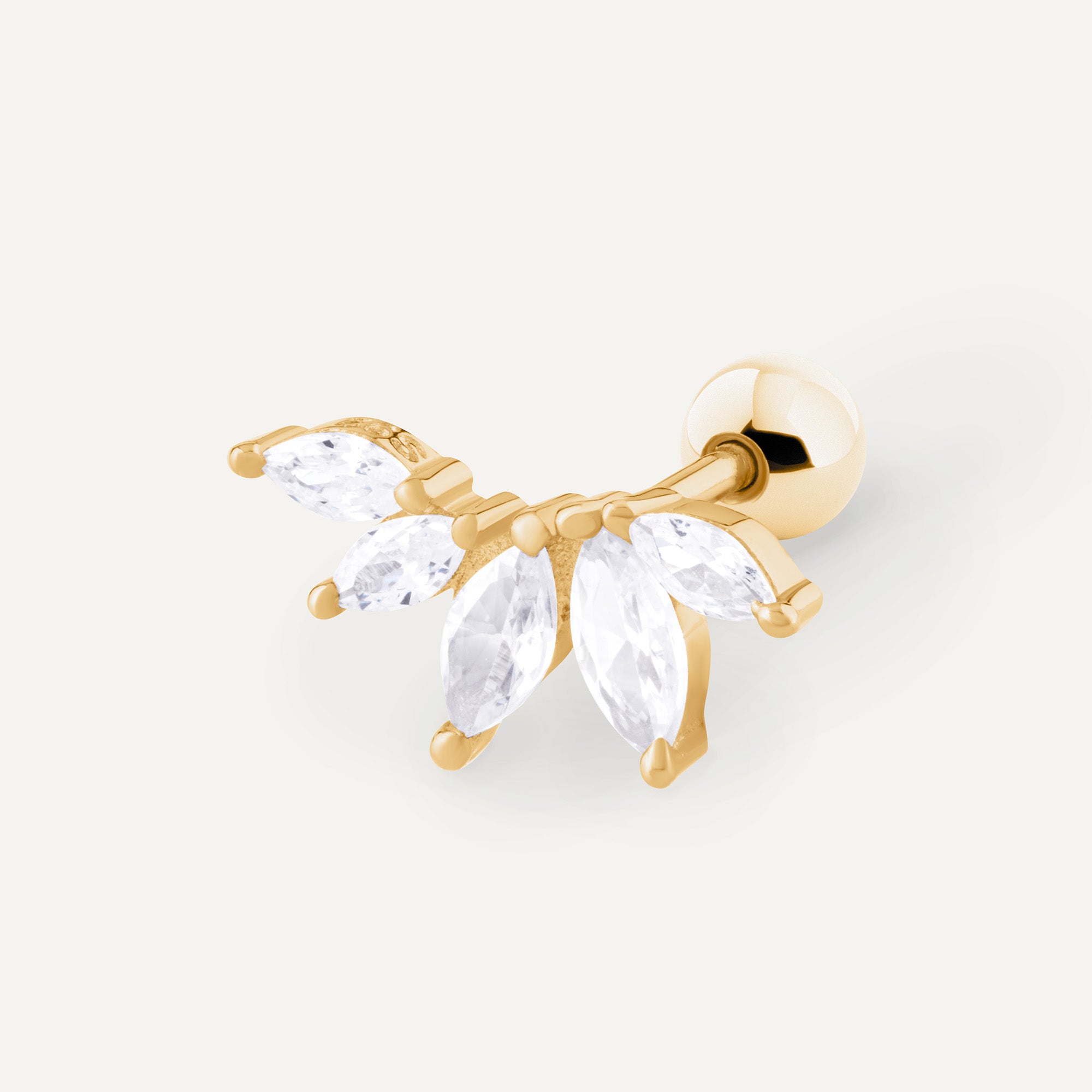
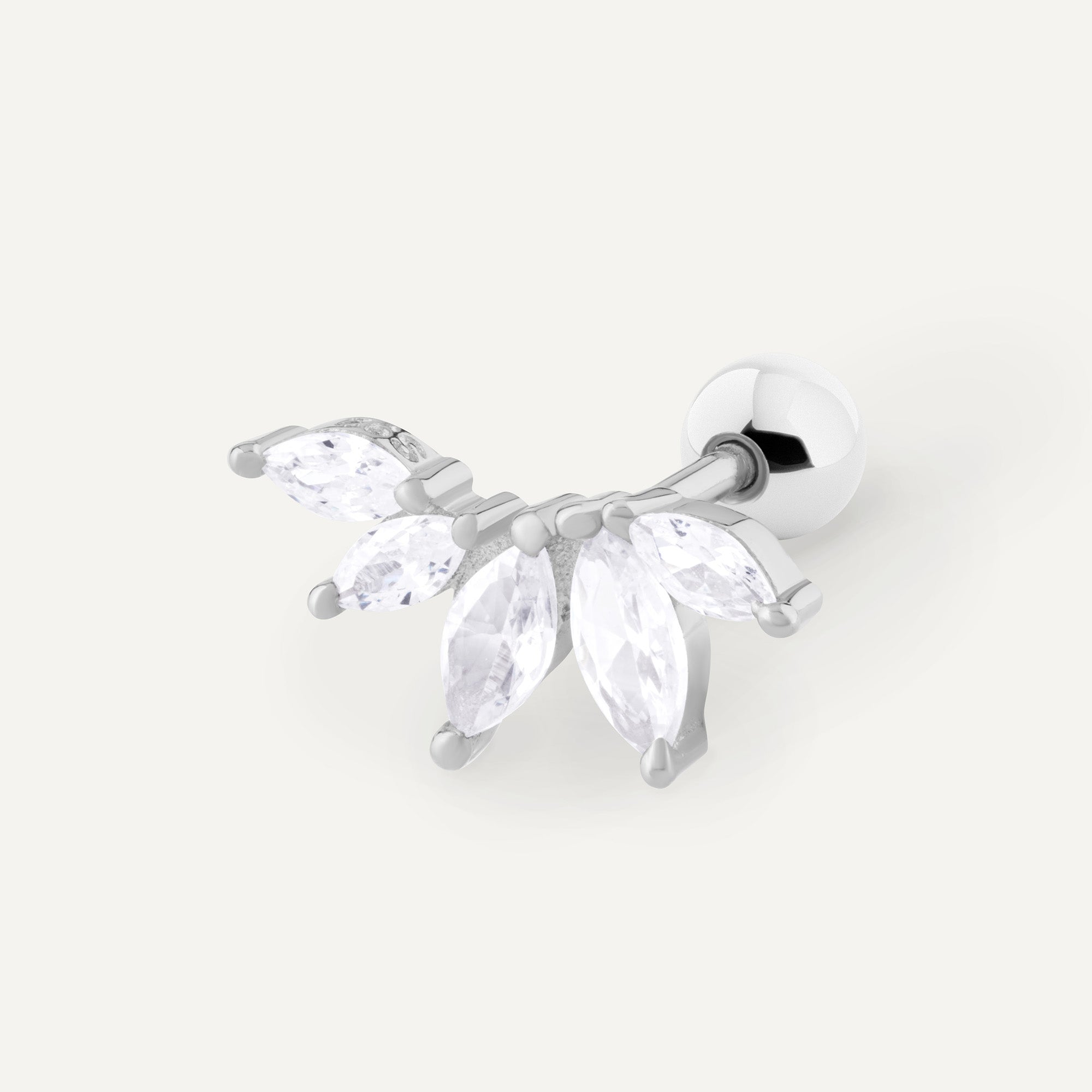
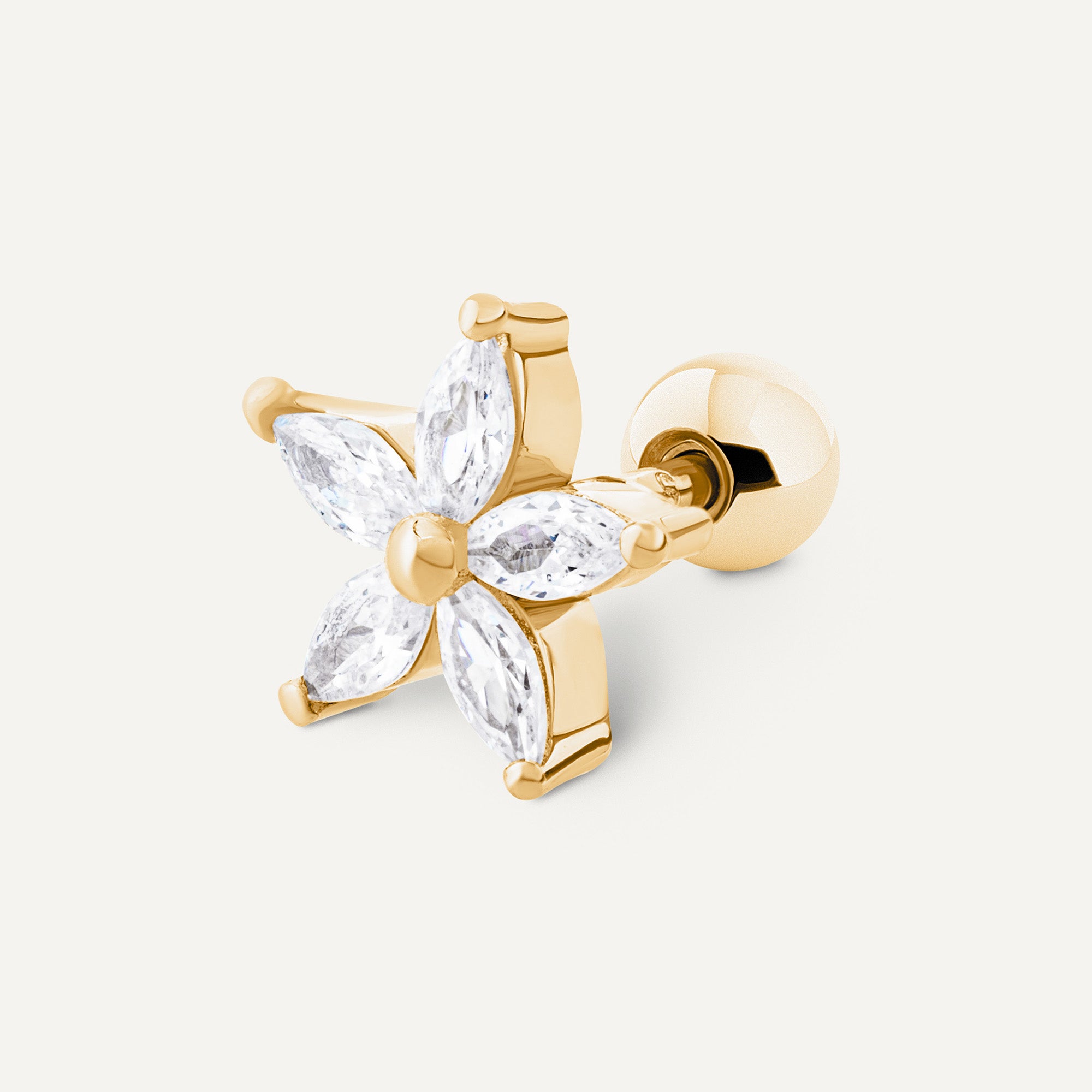
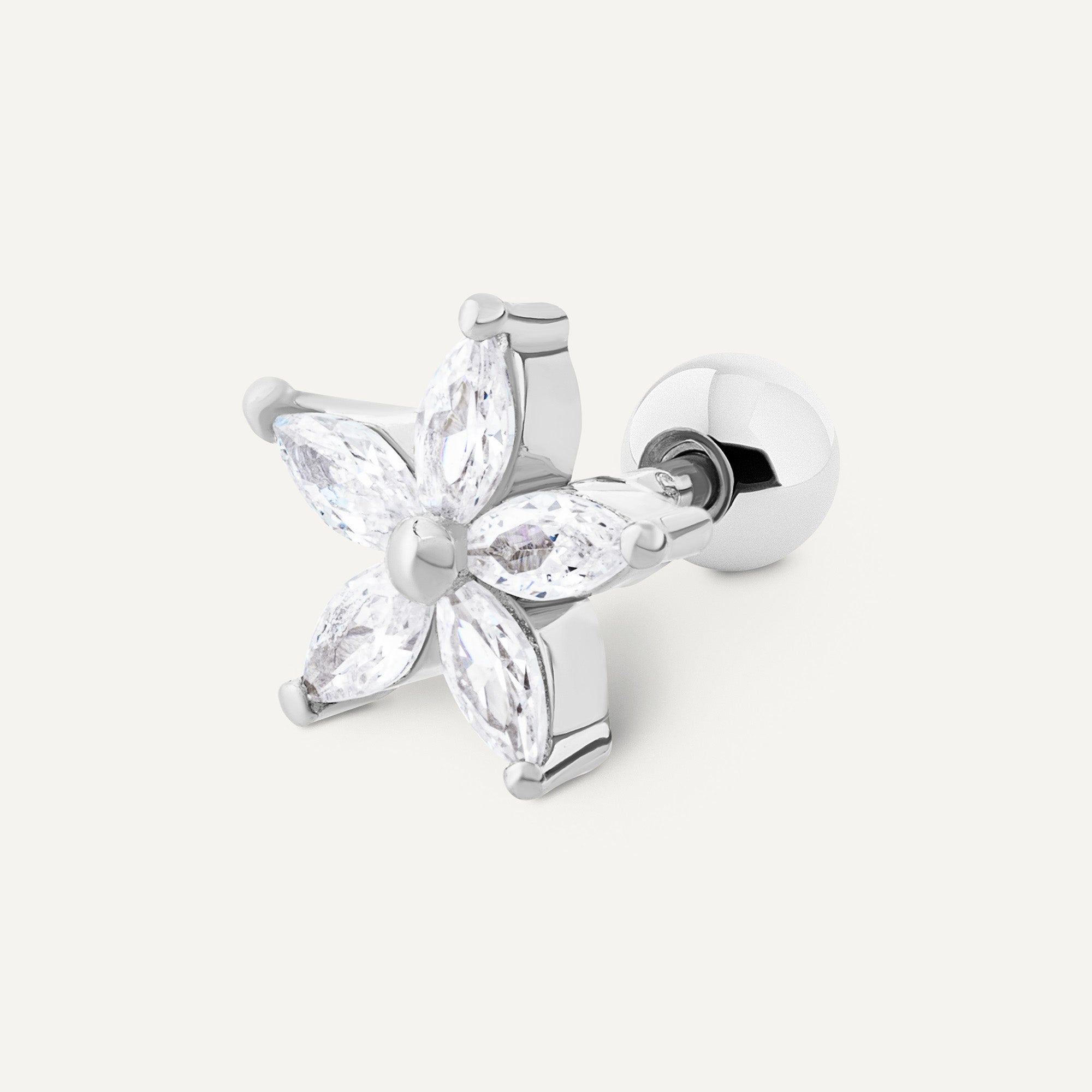
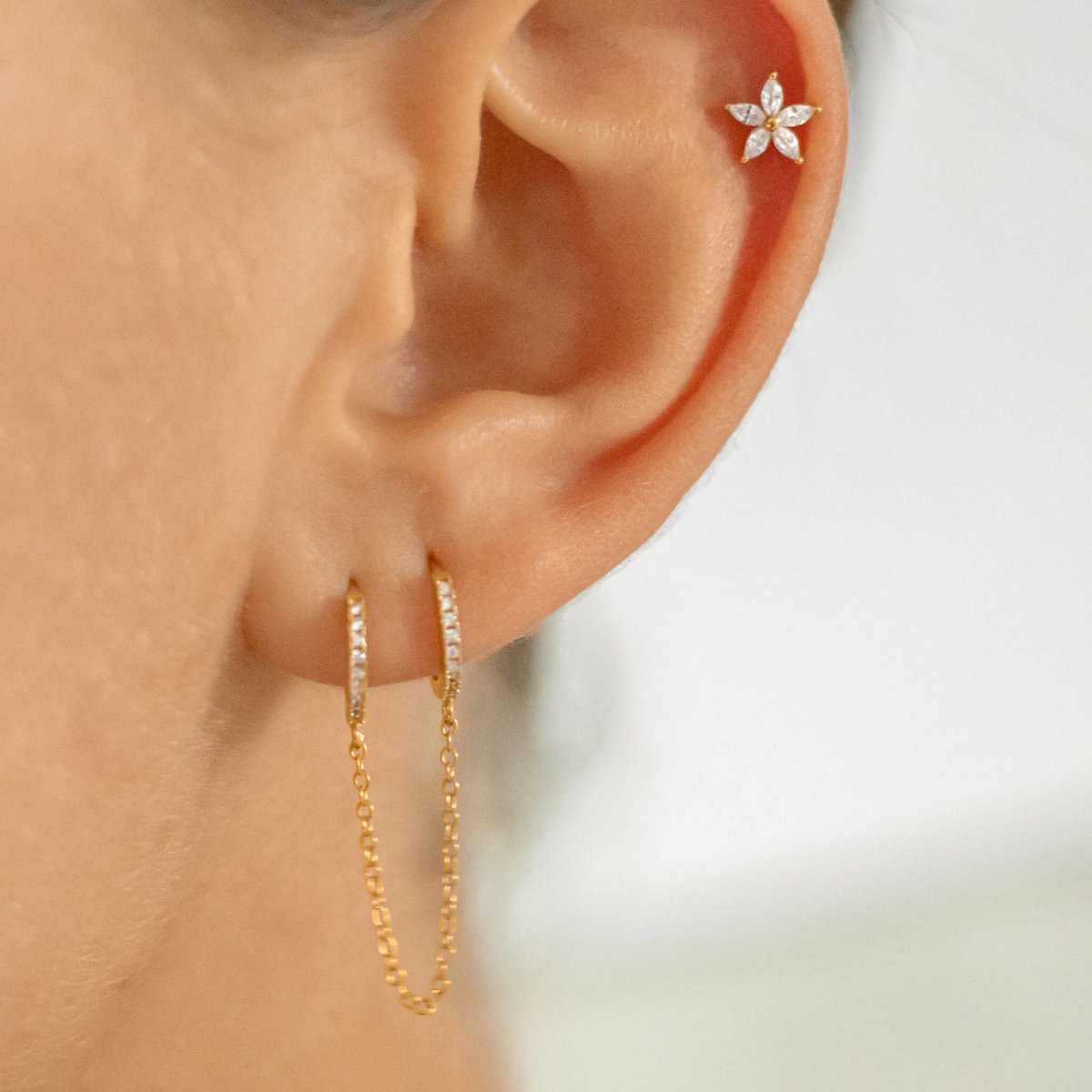
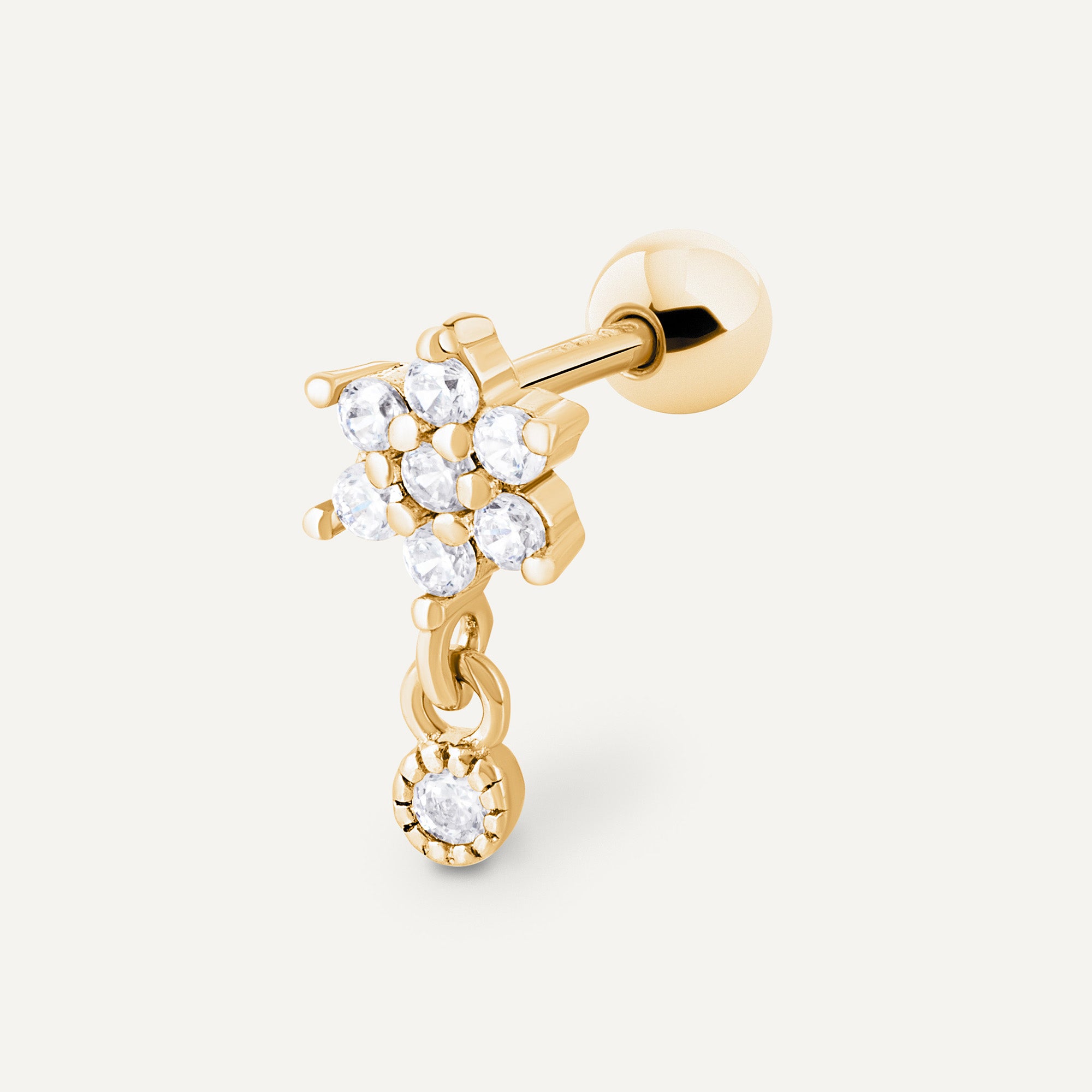
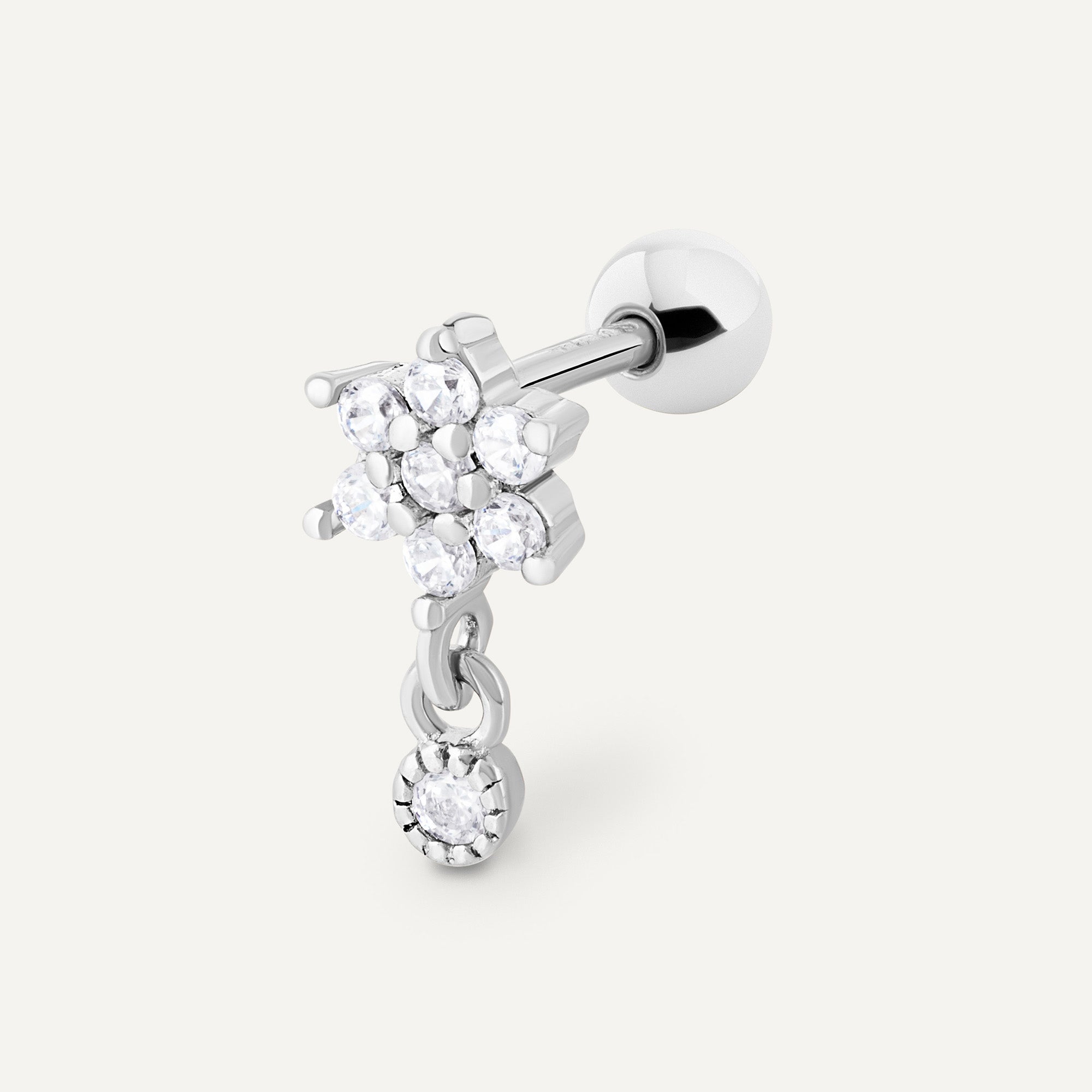
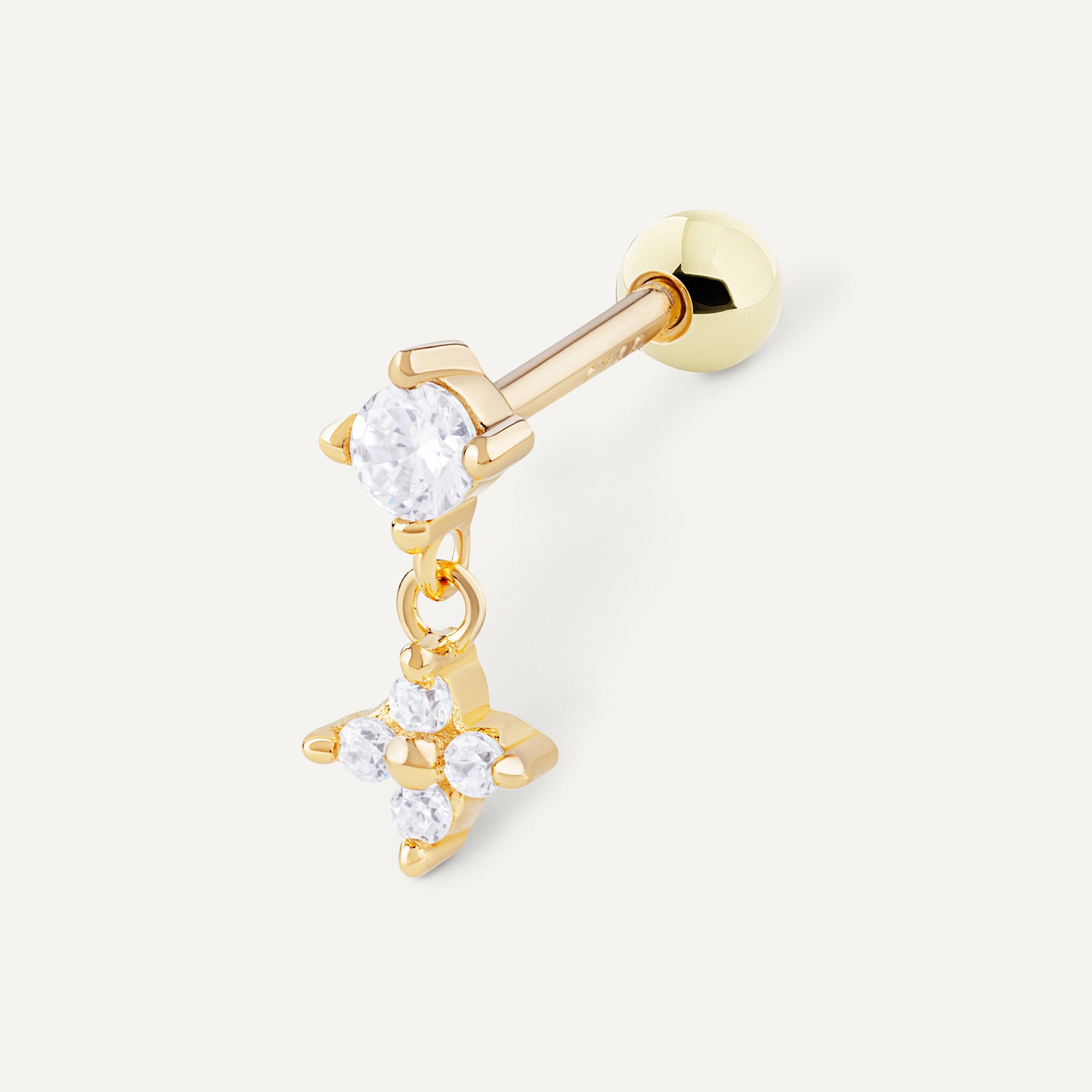
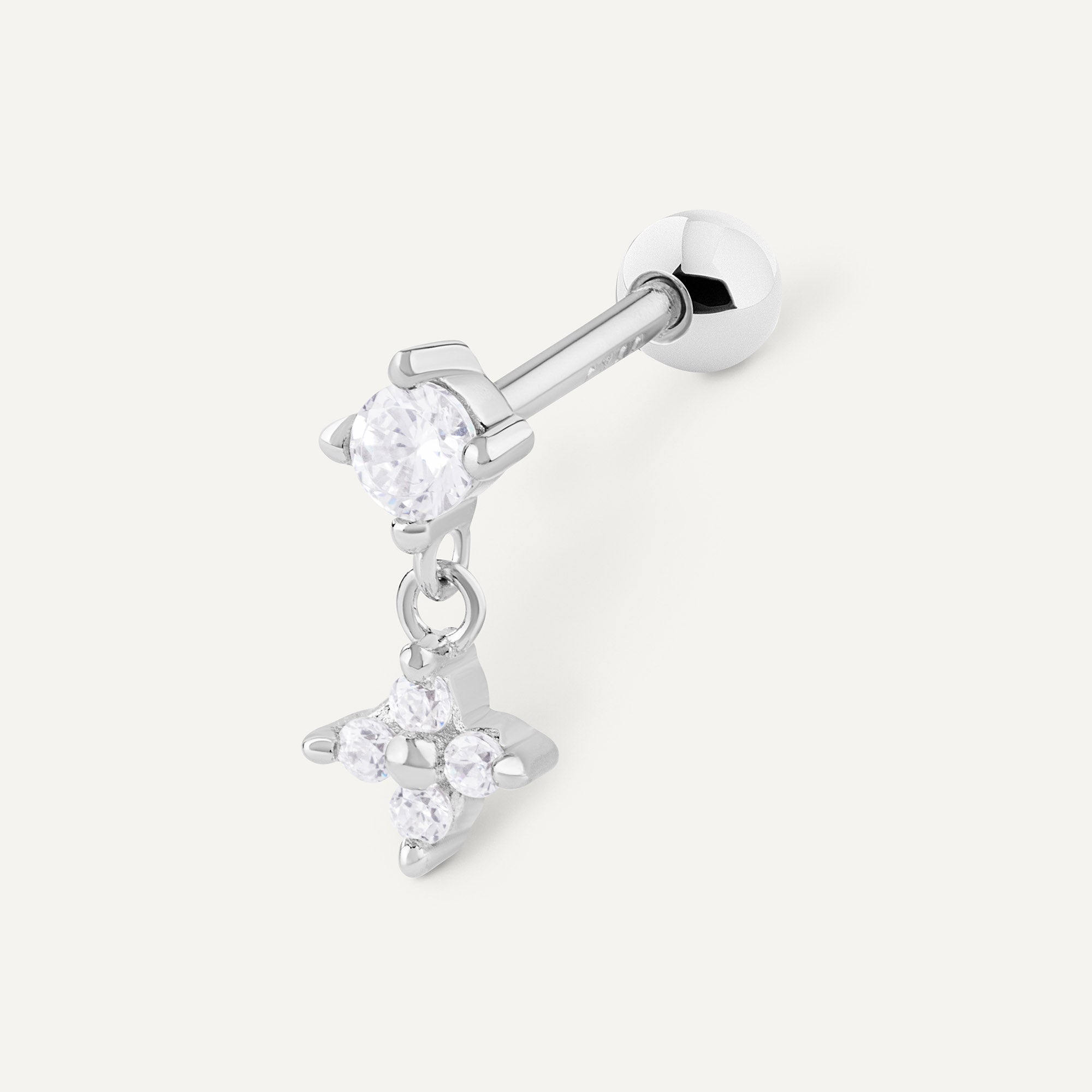
What is a stud piercing?
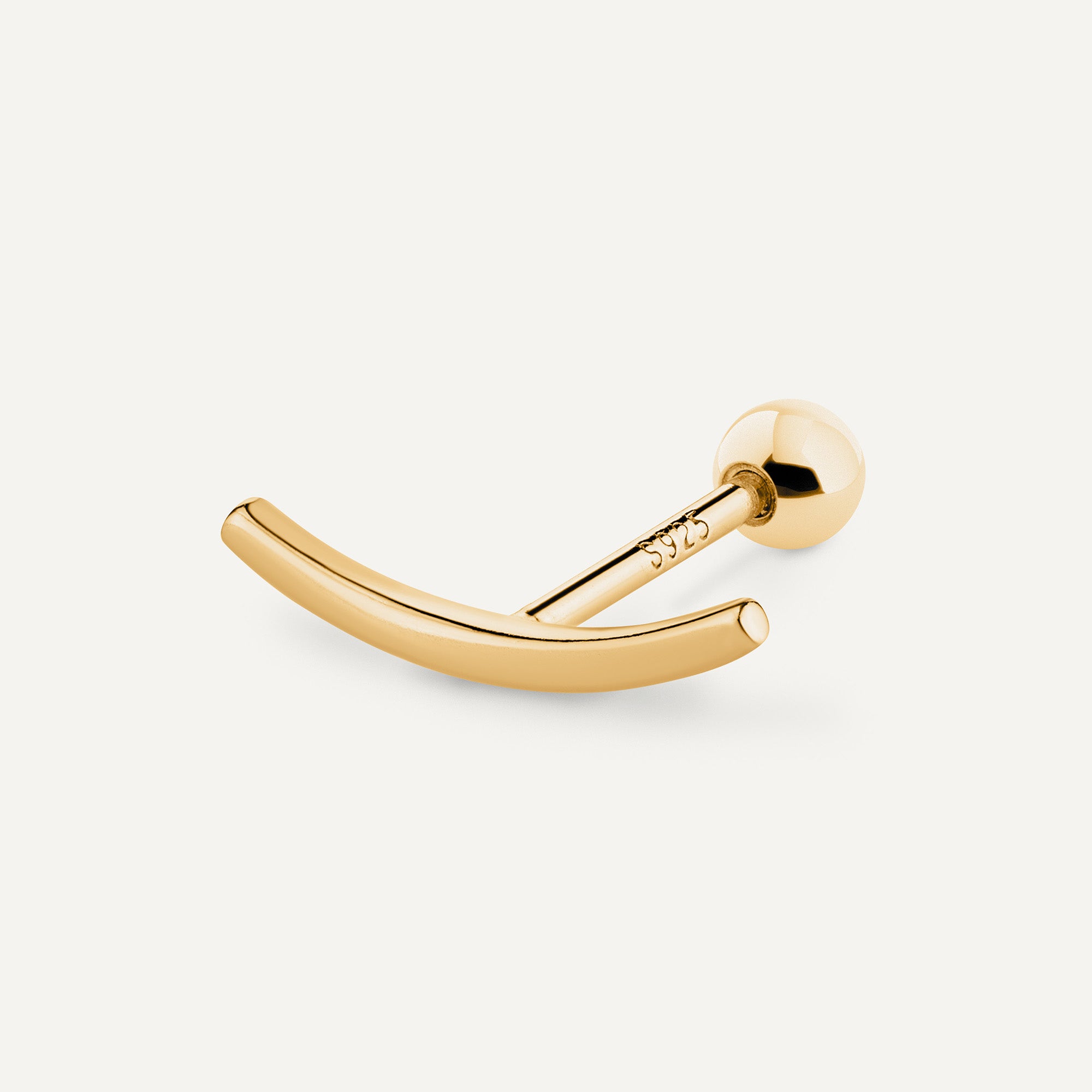
A stud piercing is a piece of jewelry with a straight post that is secured from the back and screws or clips onto a backing. Sold individually, the stud is designed to be worn continuously; it is one of our best-selling piercing products, always very trendy and at an accessible price. It differs from the classic stud earring, which is worn in pairs on the lobe and removed daily: here, the stud piercing is installed for long-term wear, on the lobe as well as on the cartilage.
Where to wear a stud on the ear?
The stud adapts to almost all ear placements and offers numerous possibilities, depending on your personality, to assert your character:
- Lobe: the most accessible placement, ideal for a first stud or for multiplying piercing points.
- Helix and cartilage: the straight post offers the best comfort there, without the pressure point of a hoop.
- Tragus: a small protrusion that perfectly accommodates a compact and discreet stud.
- Conch: a large area that leaves room for bolder motifs.
- Rook: a thin fold that requires a short, well-fitted post.
For each placement, we offer several types of creations with shapes and designs to adapt according to your style and look. The piercings can be worn by both women and men.
Find details of the different ear piercings, for each zone, on our pages lobe piercing, helix piercing, tragus piercing, conch piercingand rook piercing, or browse our entire piercingcollection.
Our materials for ear piercings: titanium, 925 silver, and 18-karat gold plated
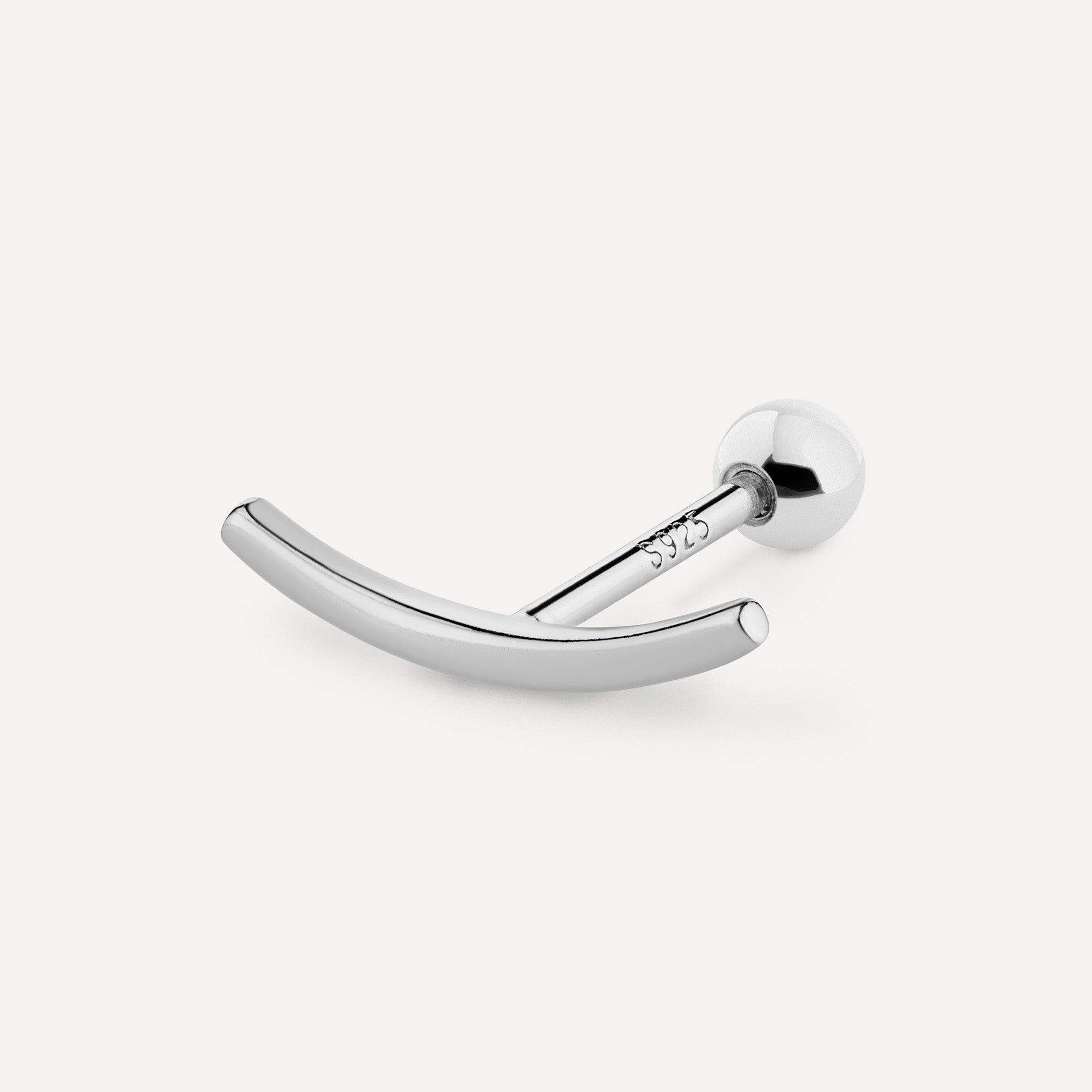
Three quality materials make up our range of studs, to guarantee the best durability for your jewelry. ASTM-F136 titaniumis hypoallergenic and biocompatible: it is the recommended material during healing and for sensitive skin. 925 silver, which contains 92.5% pure silver, offers lasting and timeless elegance. The 18-karat gold-platedstud brings a warm glow to the ear composition, for a more precious touch. Discover our complete selection of titanium studs.
Post length, diameter, and motif: choosing your stud wisely
Two measurements determine the right choice of a stud: the length of the post, which must correspond to the thickness of the cartilage or pierced lobe, and the gauge of the jewelry, expressed in millimeters. A post that is too long or too thin creates unnecessary friction and pressure points. As for the motif, count on 2 to 3 mm for a discreet and minimalist effect, and beyond that for a bolder piece that catches the eye.
Placement
Standard post length
Gauge
Lobe
6 mm
1.2 mm
Helix / cartilage
6-8 mm
1.2 mm
Tragus
6 mm
1.2 mm
Conch
8-10 mm
1.2-1.6 mm
Rook
6 mm
1.2 mm
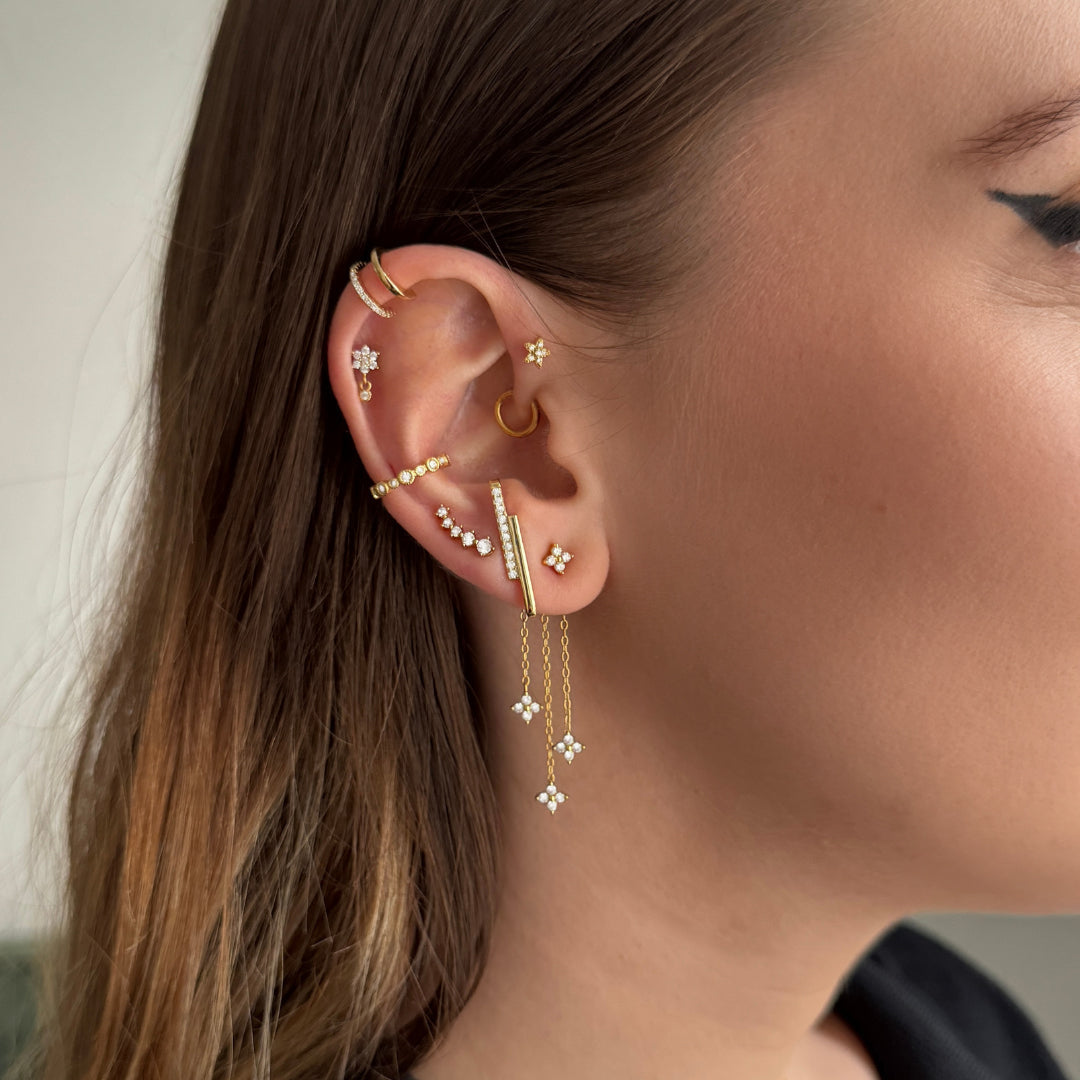
Stacking studs to curate your ear
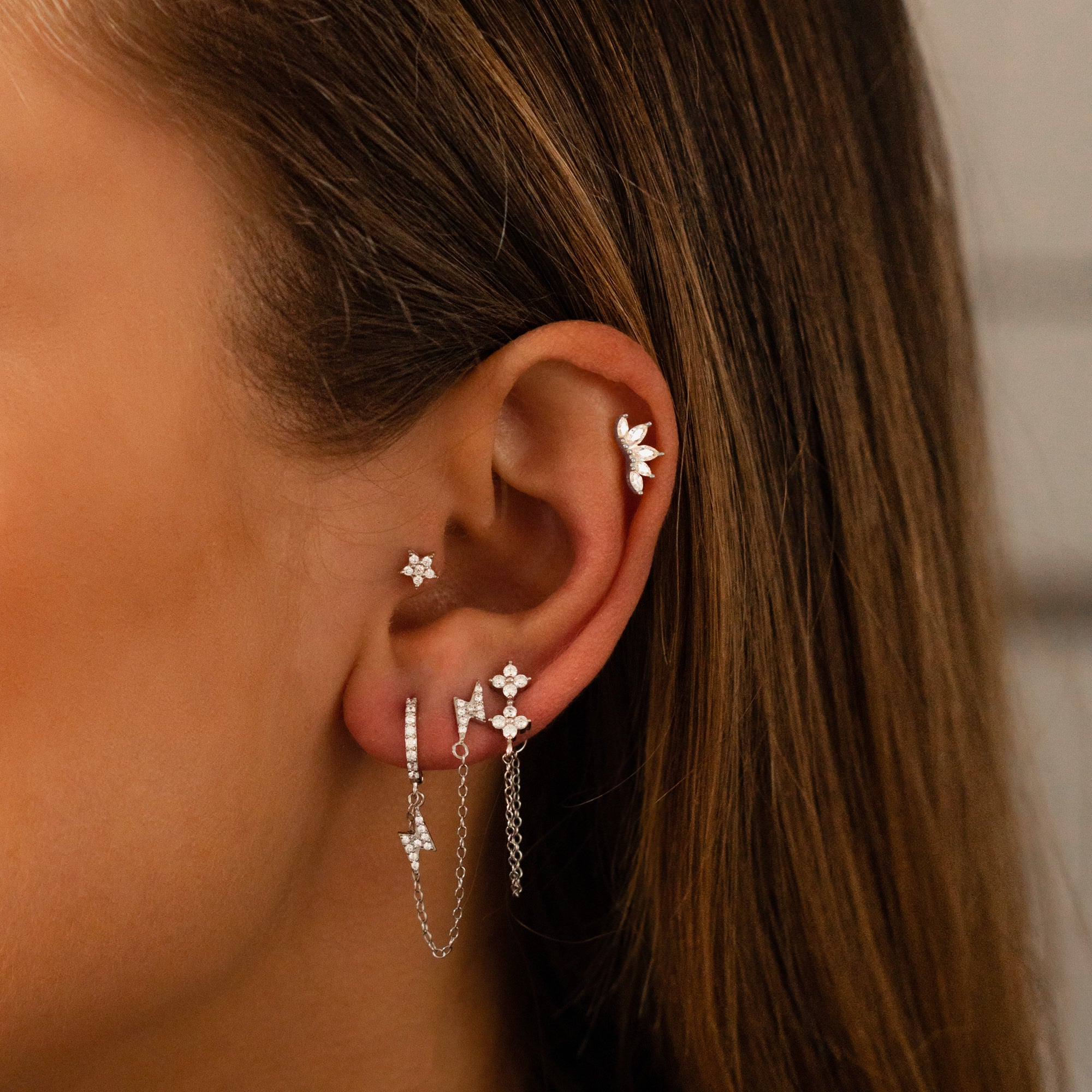
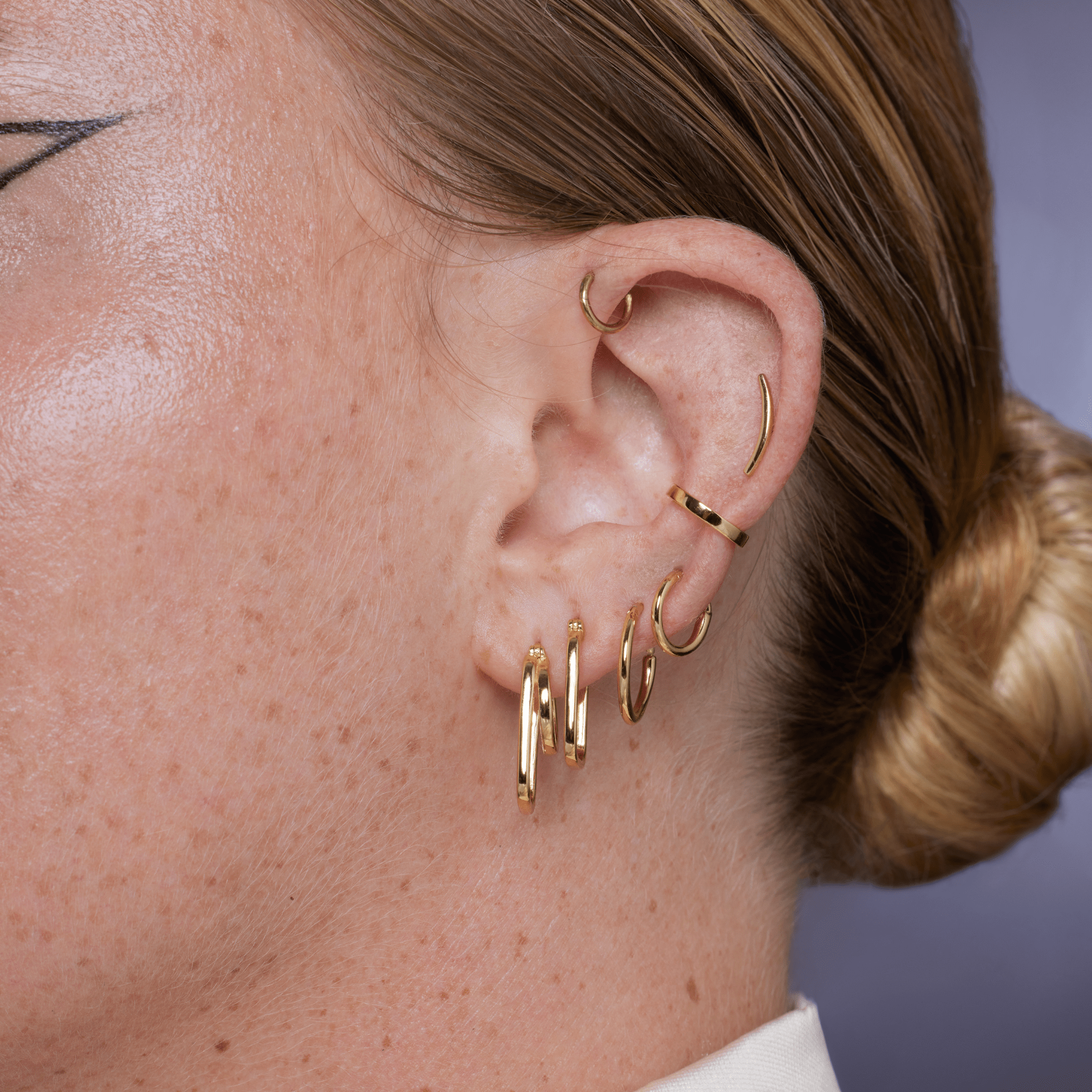
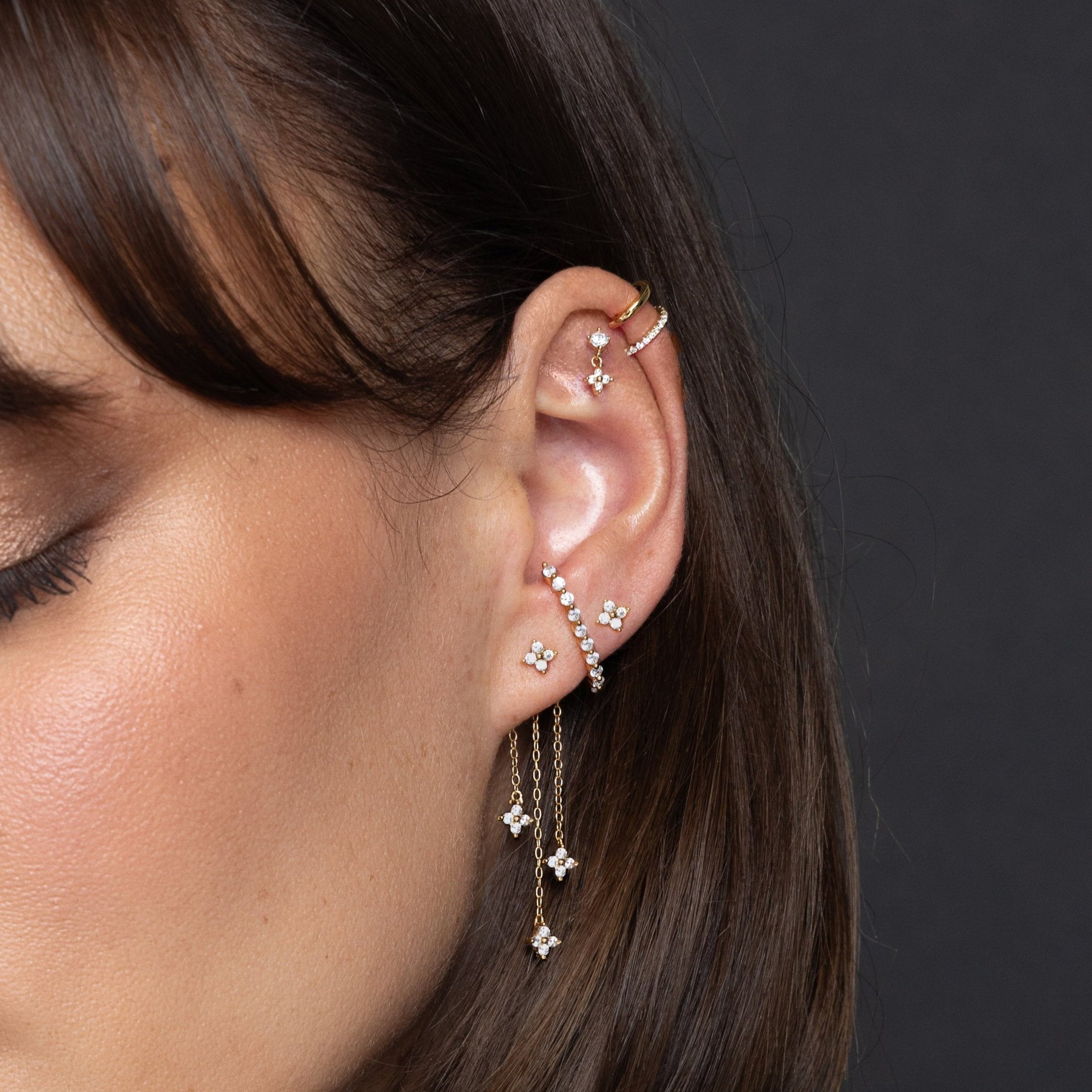
The stud is the easiest format to stack: its straight post and flat profile do not protrude and do not catch on hair or clothing. Across multiple holes, it lends itself particularly well to mixing motifs, sizes, stones, and metals to compose an ear that reflects you, or for different occasions.
To get inspired to create your own stack, discover our compositionsor, if you prefer a non-piercing alternative, our ear cuffs.
We also offer a range of rings, bracelets, and necklaces that will complete your compositions, the key being to find the right balance.
H2 : We answer your questions
Here are the most frequently asked questions about the ear stud piercing.
H3 : What is the difference between a stud piercing and a stud earring?
The stud piercing is secured by a straight post screwed or clipped from the back, against the classic push-back of a stud earring. It is sold individually and worn continuously, whereas the earring is worn in pairs and removed every day. The piercing stud can be installed on both the lobe and the cartilage.
H3 : Can you put a stud on a fresh piercing?
It is recommended to wait for complete healing before changing the initial jewelry placed by the piercer. ASTM-F136 titanium remains the preferred material for a new piercing, as it limits the risks of skin reaction. If in doubt, a professional can confirm that the area is ready for a change.
H3 : Which stud model should I choose for the helix?
Choose a post length adapted to the thickness of your cartilage, neither too short nor too long. Opt for a compact motif to avoid daily friction under your hair. Find our advice in the section dedicated to choosing the post above on this page.
H3 : How to change a piercing stud yourself?
Always start by washing your hands thoroughly. Hold the backing at the back and gently unscrew or unclip the post, never forcing it. In case of doubt or resistance, it is better to consult a professional rather than risking damage to the piercing.
H3 : Is the stud suitable for sensitive ears?
Yes, provided you choose ASTM-F136 titanium, a biocompatible and nickel-free material. Its straight post also limits pressure points compared to a hoop, making it a comfortable option for reactive skin.
Healing a cartilage piercing can take 3 to 12 months, while a lobe piercing heals in about 6 to 8 weeks; if you have sensitive ears, we advise you to favor lobe placements.
H3 : Can you keep a piercing stud in permanently?
Yes, it is the exact format designed for that: its flat profile does not catch on clothes or the pillow at night. However, it is advisable to regularly check the tightness of the post to ensure it remains securely fastened.